
How many restrooms does a race route need?
Start with the finish area, since that is where the crowd sits longest. A festival zone with food trucks, family waiting areas and awards holds people for hours, so it needs more units than a water stop that runners pass in seconds. Race organizers in Sanford typically split restrooms three ways: heavy placement at start and finish, lighter placement at aid stations, and a reserve block near the medical tent. Portable restroom rental plans should account for spectator clusters too, not just registered runners, because families gathering near a finish chute can outnumber the field. For accessible route planning, ADA Standards section 213.2 requires that where single-user units are clustered, at least 5 percent, and never fewer than one unit, be wheelchair accessible. That means even a small aid station with three units needs one ADA accessible porta potty on site, not just the start and finish areas. Ground conditions matter along a route, too. ADA Standards section 302.1 calls for floor and ground surfaces that are stable, firm and slip resistant, which rules out soft turf or loose gravel for accessible unit pads. If your course runs through Sanford and loops toward Winter Springs, 11.9 miles south, or touches ground near Deltona, 16.8 miles northeast, plan placement early since drive time affects delivery windows on race morning.
What should the finish line restroom setup include?
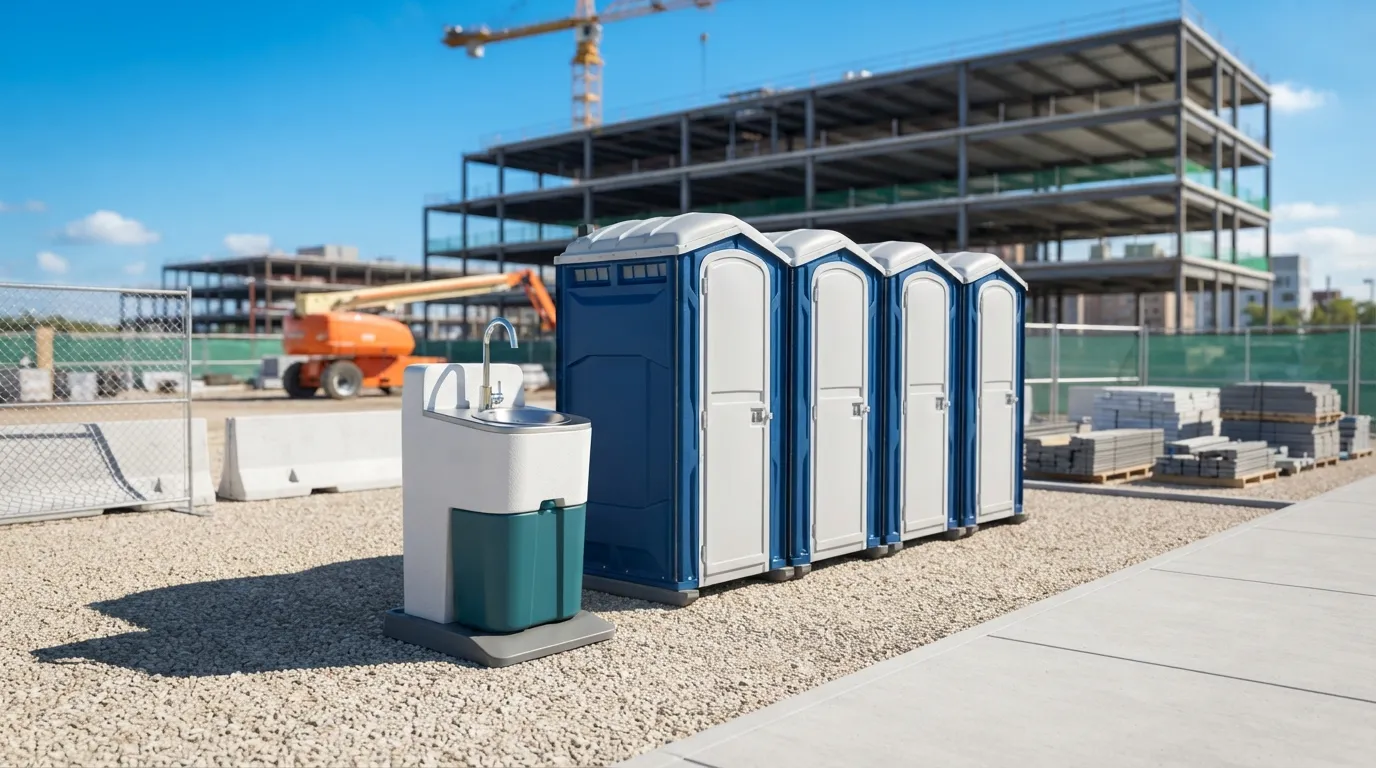
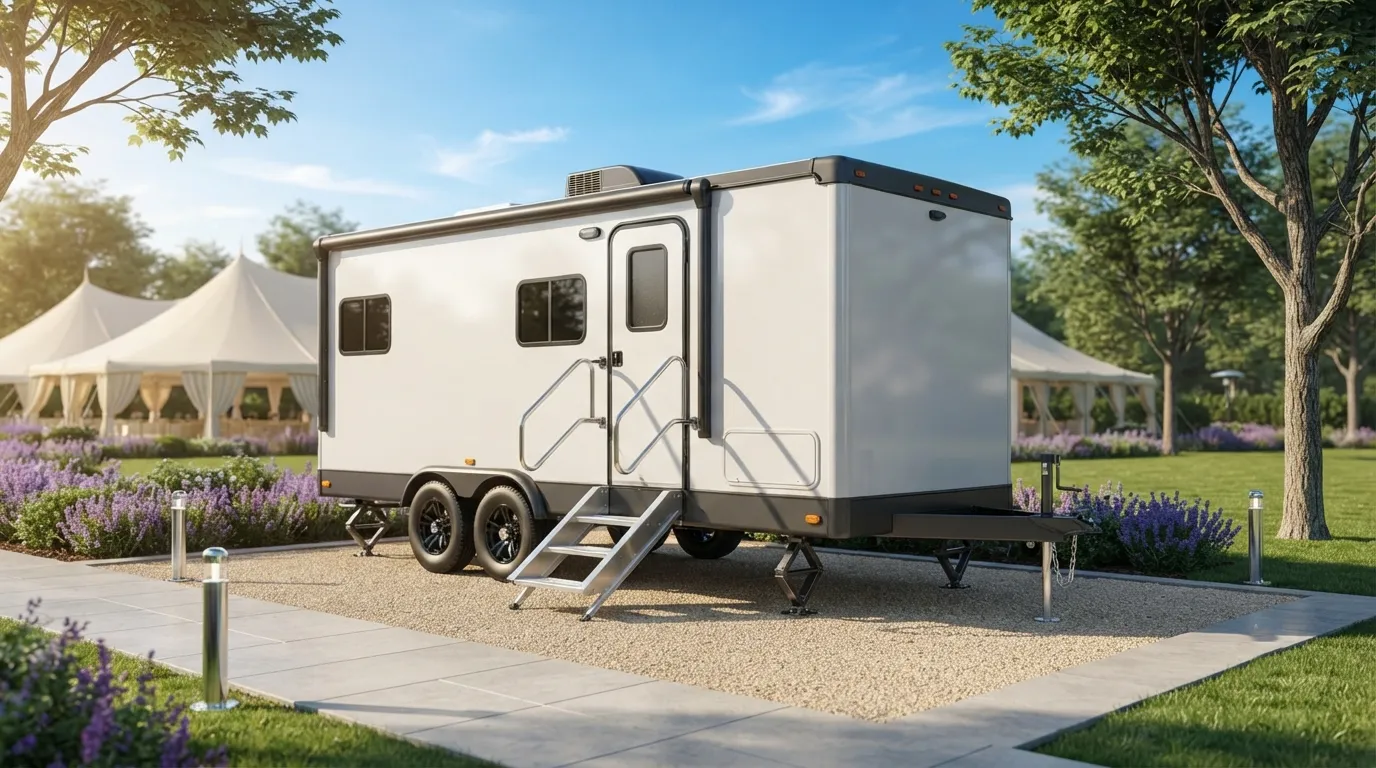
The finish area carries the longest dwell time on the course, so it needs the deepest restroom bench and the most reliable service run. Pair event restroom rental units with a handwashing station rental near any food or beverage tables, since runners and volunteers handling snacks benefit from a dedicated wash point close to the crowd. A standard unit holds a 60 to 70 gallon tank and stands about 92 inches tall, sized for high-traffic festival use without needing mid-event service on shorter races. For races expecting a larger turnout or a VIP or sponsor area, a deluxe flushable porta potty or a compact 2 stall restroom trailer gives finish-line guests a step up from standard units. Larger races with tiered sponsor tents sometimes bring in a 4 stall restroom trailer instead, especially when the finish festival runs several hours past the last runner's crossing.
Power matters here too. Restroom trailers, light towers and any lit signage at a finish area often run off a temporary power pole, and knowing how to brace a temporary power pole against wind and foot traffic keeps cords and lighting stable through a full race morning. A pole set on soft ground or near a walkway needs a stable base and clear route markings so runners and volunteers do not trip cabling. Pair that with light tower rental for early start times before sunrise, since Sanford races staged before dawn need lit staging areas at both the start corral and any pre-race restroom bank.
Do race restrooms need to meet OSHA standards?
Race day crews and vendor staff fall under general sanitation rules even though runners themselves are not employees. OSHA 1926.51(c) sets toilet ratios for construction-style workforces, and race organizers with a paid setup and teardown crew should apply the same logic: 1 toilet for 20 workers or fewer, scaling up from there. Volunteer-heavy races often treat this as a floor, not a ceiling, since spectator demand usually pushes real restroom counts well past the crew-only minimum. Sanford Porta Pros can help calculate that gap using the how many porta potties do I need guide, and a deeper breakdown of workforce ratios sits on the OSHA portable toilet requirements page. Washing facilities also matter if your crew handles course-marking paint or line striping chemicals; OSHA 1926.51(f)(1) requires washing facilities specifically where workers apply paints, coatings or similar contaminants, so a marking crew needs a wash station nearby, not just runners at the finish. For general water needs, OSHA 1926.51(a)(1) requires an adequate supply of potable water at any place of employment, which covers volunteer check-in tables and medical tents along the route.
Placement in the public right of way for a start line or road closure needs confirming directly with the City of Sanford, since permit rules vary by route and event size.
FAQ
How far in advance should I book race restrooms?
Race dates are fixed and predictable, so book as soon as your route and headcount are set. Popular Sanford race weekends fill delivery slots fast, and a request a quote submitted early locks placement before another event grabs the same trucks.
Can I get restrooms delivered to multiple points along the course?
Yes. Sanford Porta Pros delivers to multiple staging points in one run, spacing units at the start, key aid stations and the finish festival. Routes touching Oviedo, 12.8 miles southeast, or Altamonte Springs, 15.7 miles southwest, are workable within one delivery day.
What is the difference between standard and deluxe units for a race?
Standard units cover aid stations and course points efficiently. Deluxe units, built for comfort, suit finish-line VIP areas or sponsor tents where guests expect a nicer restroom experience. See porta john rental for standard unit specs.
Do I need an ADA unit at every restroom cluster?
Yes, per ADA Standards section 213.2. Every cluster, even a small three-unit aid station, needs one accessible unit minimum. Full accessible requirements sit on the ADA restroom requirements page.
What happens if my race runs over the expected end time?
Tell your route coordinator early. Sanford Porta Pros can extend service windows or add a same-day top-off, especially useful if an emergency porta potty rental unit is needed for overflow crowds.
Next step
Get a delivery date
Tell us the address, the dates and the headcount. We size the order and confirm the route.