
Where should a porta potty go on a job site or in a yard?
Pick flat ground first. A standard unit runs about 44 by 48 inches at the base and stands roughly 92 inches tall, so give it a little headroom under trees or eaves. Keep it out of low spots that pool water after rain, since Sanford gets its share of afternoon downpours. Service access matters as much as the spot itself: the truck needs a clean lane to the unit, not a maze around parked trailers or a mobile office trailer. If you are also renting a storage container or a 20ft storage container for the same site, group them so one visit covers everything. For events, our event restroom rental crews walk the layout before delivery, and the same logic applies to a backyard wedding or a construction lot in Sanford. Check our porta potty rental checklist before delivery day.
How much clearance does the delivery truck need?
Roll-off and pump trucks need about 60 feet of straight clearance behind the drop point, and that number matters whether you are placing a roll-off dumpster rental or scheduling a septic pump-out. Overhead lines and low branches cause more delivery delays than tight driveways. If a dumpster is going on a public street or right of way in Sanford, placement there needs confirming with the city; we cannot state a permit fee or ordinance number here, so ask before delivery if the unit will sit off your own property. That question comes up as much as any dumpster placement permit cost estimate we get asked for. See dumpster permit requirements and dumpster sizes and dimensions for the specifics you will need to have ready when you call.
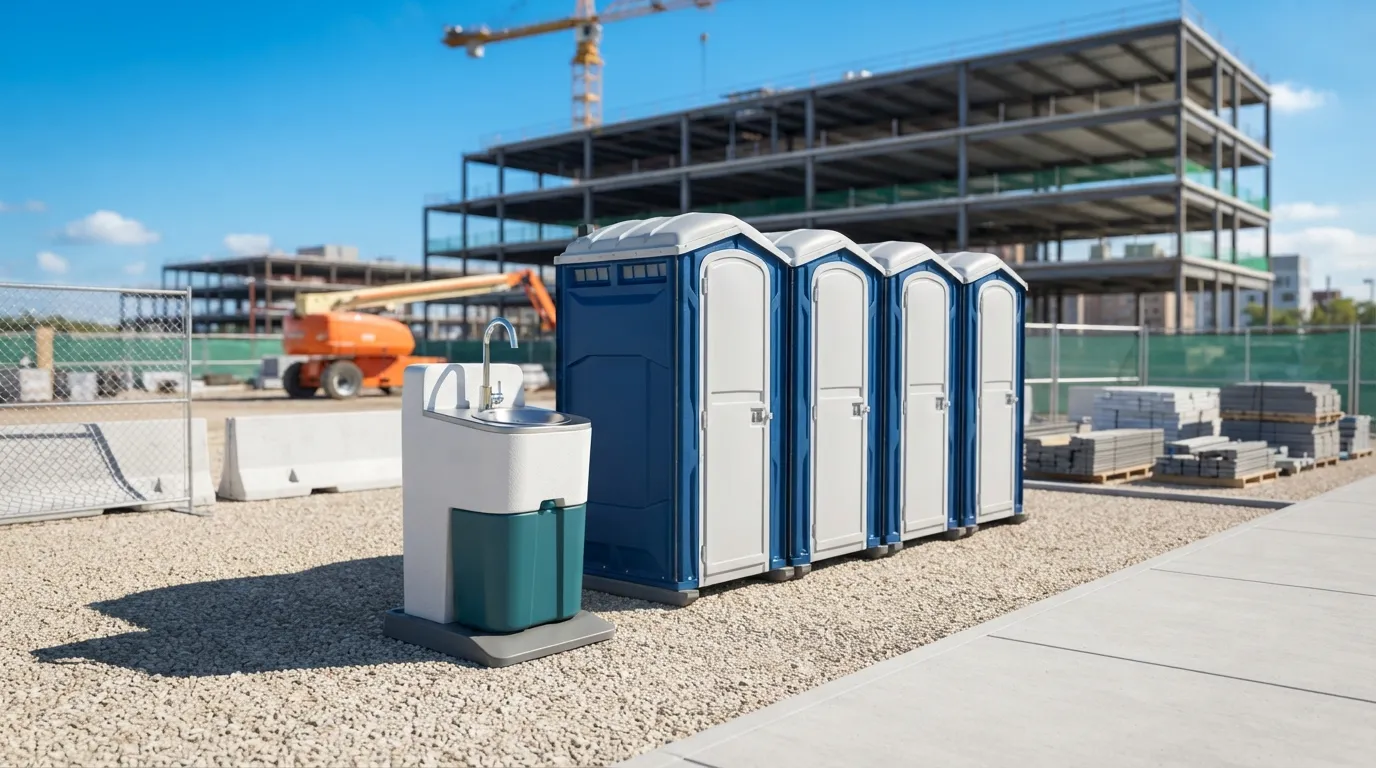
Why does ADA placement matter for accessible units?
Because an accessible unit that nobody can reach does not meet the standard. ADA Standards 213.2 requires that where single-user portable toilets are clustered, at least 5 percent be accessible, never fewer than one. The door opening needs a minimum 32 inches per ADA Standards 404.2.3, the unit needs a 60 inch turning circle inside per ADA Standards 304.3.1, and reach ranges for the paper and sanitizer follow ADA Standards 308.2.1, topping out at 48 inches high. Latches and dispensers need to work with one hand and no more than 5 pounds of force under ADA Standards 309.4. Our ADA accessible porta potty units get placed on the same firm, level pad as any standard unit, with a ramp graded no steeper than 1:12 per ADA Standards 405.2 when the ground calls for one. Full detail lives on our ADA restroom requirements page.
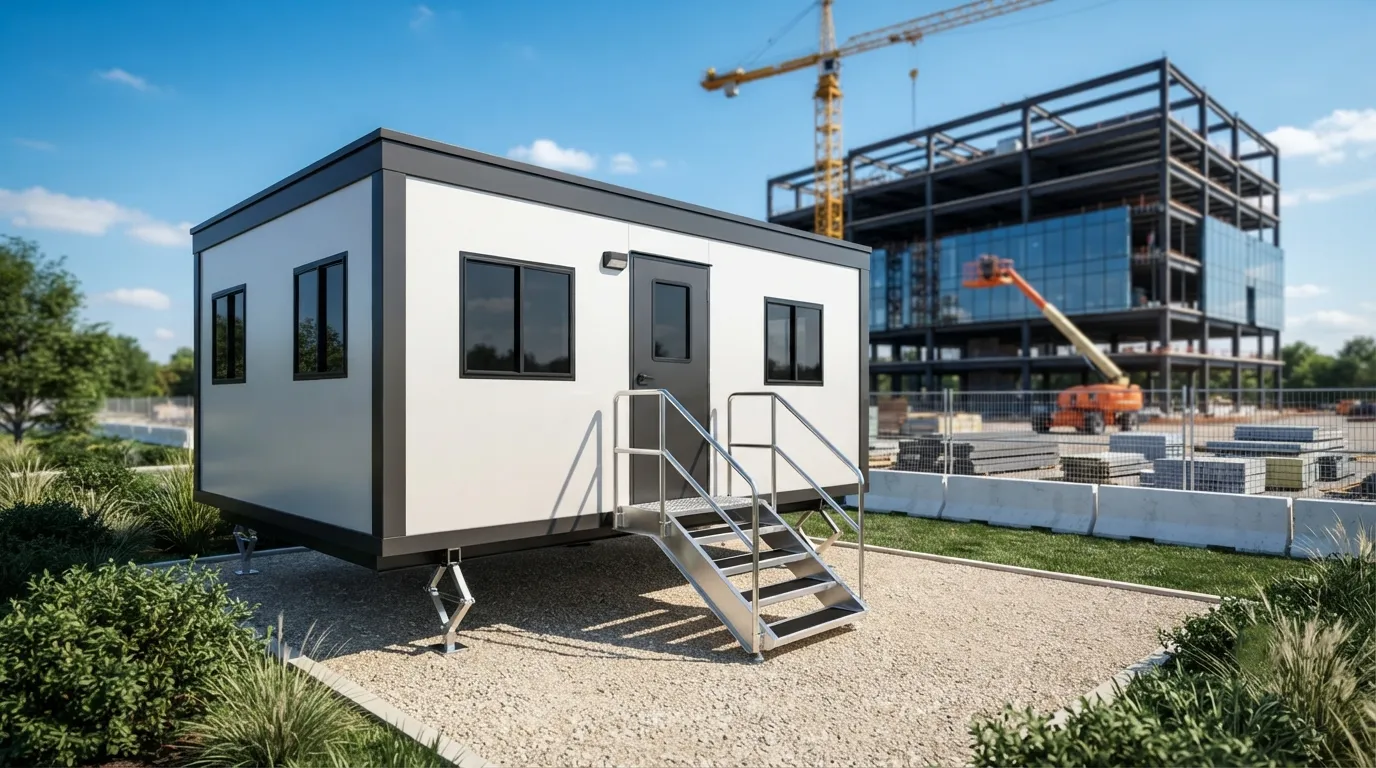
What placement rules apply on construction sites?
Worker count sets your minimum. OSHA 1926.51(c) calls for one toilet facility per 20 workers or fewer, scaling up as crew size grows, and placement needs to keep that facility genuinely reachable during a shift, not tucked behind a stack of material. Add potable water under OSHA 1926.51(a)(1) nearby, and if the crew is applying paints, coatings, or insecticides, washing facilities under OSHA 1926.51(f)(1) belong at that specific work area, not just at the main gate. Lighting matters after dark per OSHA 1926.56(a), and any barricade around the unit should follow OSHA 1926.202. Keep the approach clear of debris under OSHA 1926.25. Our construction site services and OSHA portable toilet requirements pages break down exact ratios by crew size, and how many porta potties do I need walks through the math for a specific headcount.
Placement decisions carry into every other rental on site. A temporary fence rental around the sanitation zone keeps units from becoming a walkway shortcut. A handwashing station rental belongs within a short walk of the toilets, not across the lot, and satisfies 29 CFR 1910.141(d)(2) only if it has actual soap and a towel or dryer, since hand sanitizer alone does not meet that standard. If you are running a portable sink rental instead and a spray head or pump breaks, replacement parts for common portable sink brands, including Ozark River portable sink replacement parts, are something we can source or point you toward so the unit stays in service instead of sitting idle. The same goes for a mobile office trailer on a job site: a damaged door gets swapped rather than the whole unit replaced, and mobile office trailer replacement doors are a routine repair, not a reason to re-rent.
Septic access follows the same rule as everything else here: clear ground, clear approach. A residential tank is typically pumped every 3 to 5 years depending on size and household use, and our septic pumping service trucks need the same kind of straight approach as a roll-off. If you are outside Sanford and searching for something like a Placerville septic pumping service, check our service areas page for coverage; we run this whole region including Winter Springs 11.9 miles south and Oviedo 12.8 miles southeast.
Can I move a porta potty myself once it is placed?
Not recommended. A full tank holds 60 to 70 gallons and gets heavy fast, and shifting it can crack the base or spill the tank. Call Sanford Porta Pros and we will reposition it during a service visit instead.
Do I need a permit to place a dumpster in my driveway?
Usually not on private property, but placement in a street or right of way needs confirming with the city. We do not have a fee or ordinance number to quote here, so ask before delivery day.
How far from the house should a septic cleanout be accessible?
Access needs to stay clear year-round, not measured in exact feet here. Keep landscaping, sheds, and parked cars off the path so our truck can reach it during a scheduled pump-out.
Where should handwashing stations go relative to the toilets?
Right next to them, within a short walk. That keeps compliance simple and keeps workers actually using the station instead of skipping it.
What ground surface works best under a unit?
Flat, firm, and slip resistant, per ADA Standards 302.1. Gravel pads, concrete, and packed dirt all work. Soft grass or mud after rain does not hold a unit level.
Next step
Get a delivery date
Tell us the address, the dates and the headcount. We size the order and confirm the route.